
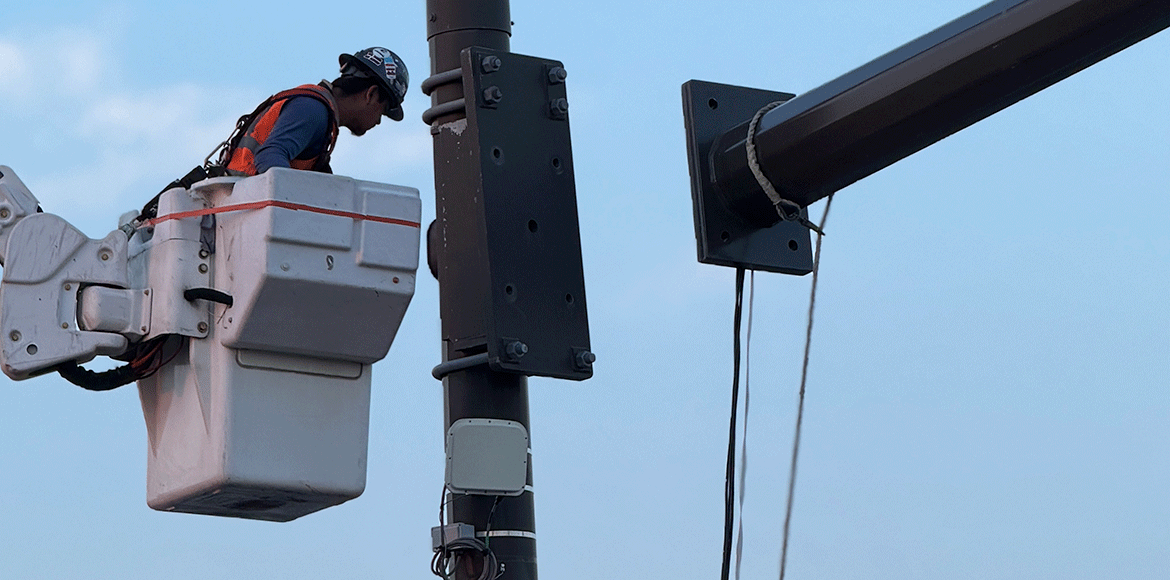
If you've noticed more construction activity around intersections and roadways in September and October, you're not imagining it. Fall is consistently one of the busiest periods of the year for traffic infrastructure work, and there are specific reasons why municipalities and contractors push hard to get projects completed before winter arrives.
In states like Colorado, the construction window is defined by weather. Concrete and asphalt work has temperature requirements that simply can't be met once consistent freezing temperatures arrive. Pavement patching, loop detector installation, pole foundations, and conduit work all require ground conditions that winter doesn't allow.
That creates a hard deadline. Any project that needs to be in the ground before winter has to be completed by late October or early November at the latest, depending on the year. Everything that was planned, permitted, and funded for the year is racing toward that window simultaneously.
Municipal infrastructure budgets typically run on a fiscal year cycle. In many jurisdictions, new funding becomes available at the start of the fiscal year, which for a large number of municipalities falls in January or the spring. From there, projects go through design, bidding, award, and mobilization before construction can begin.
By the time all of that is complete, summer is often already underway. That puts fall squarely in the peak execution window, when projects that were planned months earlier are finally hitting the construction phase at the same time across dozens of jurisdictions.
For traffic signal contractors, this means fall scheduling is dense. Multiple projects are running simultaneously, crews are fully deployed, and material lead times become a real factor in whether a project hits its completion target before the weather turns.
Beyond new construction, fall is also the time when municipalities prioritize signal upgrades and equipment replacements. Aging controllers, deteriorating signal heads, outdated detection systems, and communication equipment that's been on the list for replacement all tend to get addressed in the fall window.
The logic is straightforward. Replacing equipment before winter means the upgraded system goes into the harshest season in its best condition. Waiting until spring means running aging equipment through another winter with the failure risk that comes with it.
This is especially true for detection systems. Loop detectors that are showing signs of wear are far better replaced in the fall, when pavement work is practical, than patched through a winter and replaced in the spring after freeze-thaw cycles have potentially made the situation worse.
More construction activity means more traffic control, more lane shifts, and more delays around active work zones in the fall months. That's an unavoidable reality of a compressed construction season. The tradeoff is infrastructure that's ready for winter and has years of reliable service ahead of it.
Understanding the seasonal rhythm of infrastructure work helps put those fall delays in context. The intersection that's torn up in October is the one that will be running cleanly through February.
For municipalities, the contractors that perform well in the fall are the ones that planned well in the spring. Material procurement, crew scheduling, and project sequencing all have to be dialed in months before the fall push begins. Last-minute scrambles in September are a symptom of planning that didn't happen in March.
At Lighthouse Transportation Group, fall project execution is something we build our entire year around. The goal is to enter the fall window with every project staged and ready to move, so that when the deadline arrives, we're finishing strong rather than rushing to catch up.
The work that gets done in the next few weeks is the work that keeps Colorado's intersections running all winter. That's the timeline we operate on, every year.
We’re a small team that loves to create great experiences and make meaningful connections between builders and customers. Join our remote ream!


.gif)