
Every second matters when a fire truck, ambulance, or police vehicle is responding to an emergency. Traffic signals are one of the biggest variables between a fast response and a delayed one. Preemption technology exists to solve that problem, and most people have no idea it's there.
Traffic signal preemption is a system that allows emergency vehicles to take control of nearby traffic signals, clearing a green light in their direction of travel and holding red lights on all other approaches. The result is a clear corridor through an intersection without requiring drivers to guess which way an emergency vehicle is heading or scramble to get out of the way.
These systems have been in use for decades, but the technology behind them has advanced considerably. Today's preemption systems are faster, more precise, and increasingly integrated with broader traffic management networks.
The most widely used preemption technology relies on optical or GPS-based communication between the emergency vehicle and the signal controller at an intersection.
Optical systems use an infrared emitter mounted on the emergency vehicle. As the vehicle approaches an intersection, the emitter sends a signal to a receiver mounted on the traffic signal. The receiver communicates with the signal controller, which then begins the preemption sequence, clearing the path for the vehicle. Once the vehicle clears the intersection, the signal returns to its normal operation.
GPS-based systems work differently. The emergency vehicle's location is tracked in real time, and the system communicates with signal controllers along the vehicle's route, preempting signals in sequence ahead of the vehicle. This approach allows for more coordinated corridor management, particularly in dense urban areas where multiple intersections need to be coordinated simultaneously.
The obvious benefit of preemption technology is faster emergency response. But the impact goes further than that.
Intersections are statistically one of the most dangerous places for emergency vehicles. Collisions involving emergency vehicles responding to calls happen more often than most people realize, and intersections are a primary location for those incidents. Preemption technology reduces the risk by removing the unpredictability of a vehicle running a red light at speed in a busy intersection.
For the surrounding community, preemption also reduces the chaos that comes with an emergency vehicle approaching a signal. Drivers no longer have to make split-second decisions about where to pull over or whether to proceed. The intersection is already being managed.
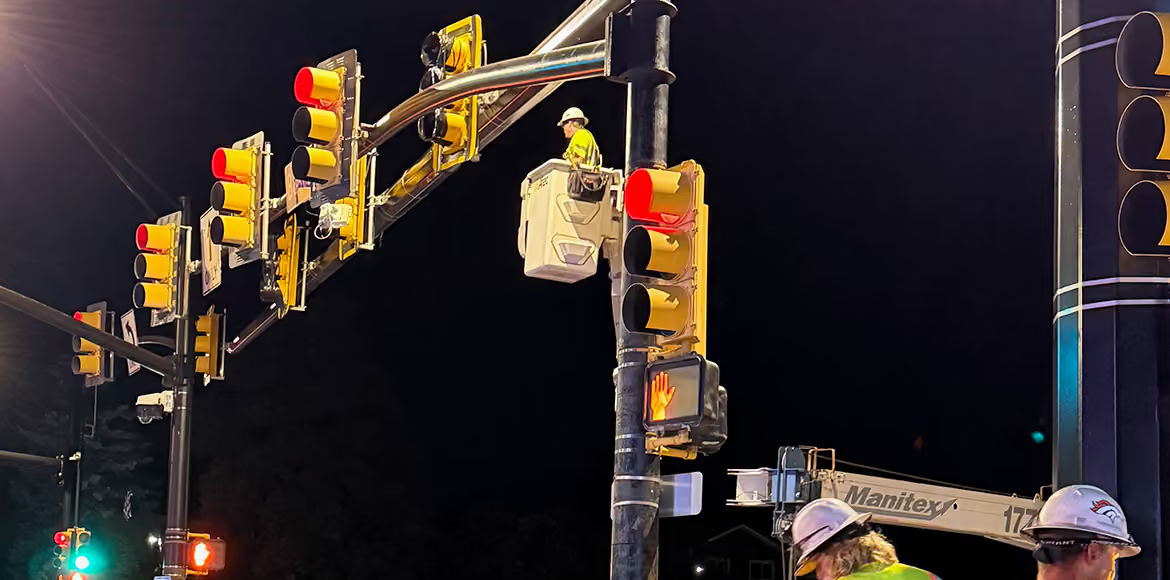
When a new intersection is built near an emergency services facility, preemption is often built into the design from the start. This is exactly the case with our recently completed project on Erie Parkway in Erie, Colorado, where a new intersection was constructed to support an incoming firehouse. The emergency preemption signal was integrated into the build so that when the firehouse opens, response vehicles will have a clear, managed path from day one.
That kind of forward planning is what separates reactive infrastructure from infrastructure that's designed to serve the community long term.
If you've ever seen a white strobe flashing on top of a traffic signal as an emergency vehicle approaches, that's preemption in action. The strobe is part of the optical receiver, and when it detects an approaching emitter, the sequence begins. It happens fast, often within a few seconds of detection, and most drivers don't even realize the signal has been preempted. They just see a green light and a clear intersection.
Preemption technology is one of those infrastructure systems that works best when nobody notices it. That's by design.
At Lighthouse Transportation Group, we install and integrate preemption systems as part of new intersection builds and signal upgrades across Colorado, Oklahoma, and Idaho. If your municipality is planning a new facility or signal upgrade near an emergency services location, preemption planning should be part of the conversation from the beginning.
We’re a small team that loves to create great experiences and make meaningful connections between builders and customers. Join our remote ream!


.gif)