
Most drivers have heard the theory that you can trigger a green light by pulling up far enough, or that motorcycles are invisible to traffic signals. Some of that is based in reality. The technology behind it is called loop detection, and it's one of the most widely used tools in modern traffic signal infrastructure.
A loop detector is exactly what it sounds like: a loop of wire embedded in the pavement at an intersection or along a roadway. When a vehicle passes over or stops on the loop, it disrupts the electromagnetic field generated by the wire. That disruption is detected by a controller, which registers the presence of a vehicle and can use that information to adjust signal timing.
Loop detectors are passive by design. They don't emit signals or communicate wirelessly. They simply sense the presence of metal, specifically the mass of a vehicle, and report back to the controller.
Without detection, a traffic signal runs on a fixed schedule. It cycles through phases regardless of whether there are vehicles waiting. That works in some locations, but in areas with variable traffic patterns, it wastes time and creates unnecessary delays.
Loop detectors allow signals to operate dynamically. If no vehicles are detected on a side street approach, the controller can skip or shorten that phase and give more green time to the busier direction. If a vehicle is detected waiting, the controller knows to serve that approach in the next cycle.
This kind of demand-responsive operation is what makes modern intersections more efficient than older fixed-time systems. The signal responds to what's actually happening on the road rather than running a predetermined pattern regardless of conditions.
The disruption a vehicle causes in a loop's electromagnetic field is directly related to the amount of metal in the vehicle. Larger vehicles like trucks and SUVs create a strong, easy-to-detect signal. Motorcycles, bicycles, and some smaller vehicles may not generate enough disruption to trigger the detector reliably, particularly if the loop is older or not calibrated for smaller vehicle profiles.
This is a known limitation of inductive loop technology, and newer detector systems have improved sensitivity to address it. Proper installation and calibration also play a significant role. A well-installed loop tuned to the right sensitivity range will detect motorcycles consistently. A poorly installed or aging loop may not.
Loops are typically cut into the pavement in a rectangular or square pattern, close to the stop bar at an intersection. You can often see the cuts in the pavement if you know what to look for, thin lines forming a square or rectangle in the asphalt, usually with a diagonal cut leading back toward the controller cabinet at the corner of the intersection.
They're also used on roadways outside of intersections for traffic counting and speed monitoring, feeding data into broader traffic management systems that help municipalities understand how vehicles are moving across a network.
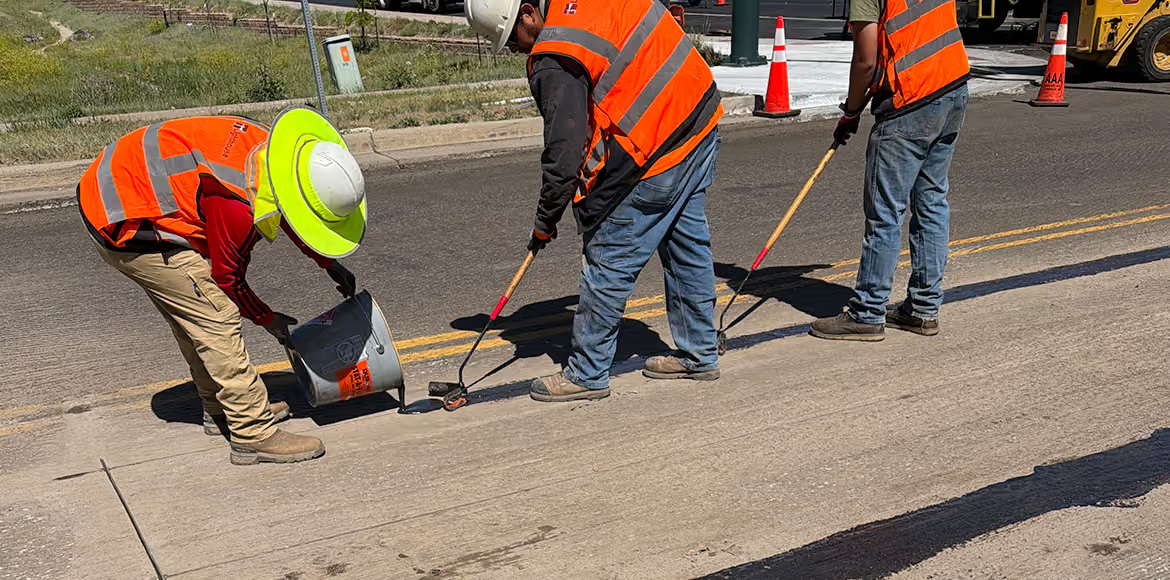
Loop installation requires cutting precise slots in the pavement, laying the wire, sealing the cuts, and connecting the loop back to the controller. It's detail-oriented work. A loop that's improperly installed or sealed can fail prematurely, particularly in climates with freeze-thaw cycles that stress the pavement around the cuts.
Maintenance matters just as much as installation. Loops degrade over time, especially in high-traffic areas where the pavement takes a beating. Regular testing and replacement are part of keeping an intersection running reliably.
At Lighthouse Transportation Group, loop detection installation and maintenance is part of our core work across Colorado, Oklahoma, and Idaho. Whether it's a new intersection build or an upgrade to an existing signal, proper detection is one of the details that determines how well the finished product actually performs.
We’re a small team that loves to create great experiences and make meaningful connections between builders and customers. Join our remote ream!


.gif)