
Summer brings the busiest stretch of the year for road and signal construction. Warmer weather, longer daylight, and dry conditions create a window that municipalities and contractors use to get projects done before winter limits what's possible. It's also the season with the highest volume of pedestrian and vehicle traffic moving through and around active work zones.
That combination, more projects and more people, makes summer the season where work zone safety planning matters most. For contractors working in or near traffic signals, that planning has to account for both the crews on the ground and the pedestrians and drivers navigating around them.
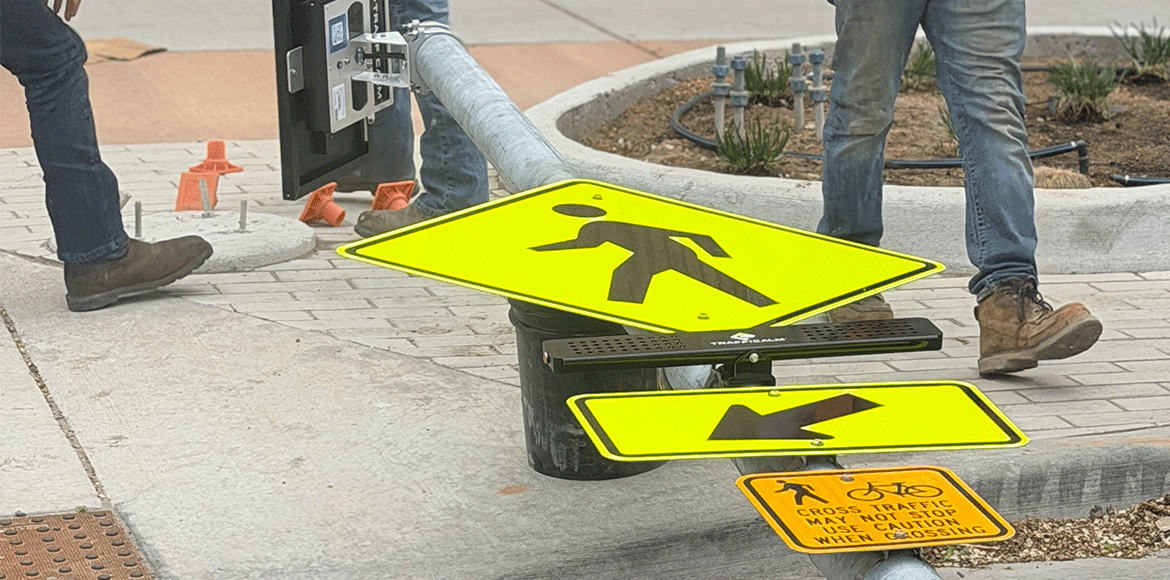
Construction season often overlaps with periods when normal pedestrian infrastructure, like crosswalks and signal-controlled crossings, is temporarily altered or unavailable. That's exactly the kind of gap that rectangular rapid flashing beacons, or RRFBs, are designed to address.
RRFBs are the high-intensity flashing units typically mounted above or alongside pedestrian crossing signs at uncontrolled crossings, the kind without a full traffic signal. When a pedestrian activates one, usually with a push button, the beacons flash in a distinct, attention-grabbing pattern that has been shown to significantly increase driver yielding rates compared to standard signage alone.
During construction season, RRFBs do extra work. Temporary pedestrian routes around a work zone often lack the established crossing infrastructure people are used to, and unfamiliar crossing points are exactly where you need the clearest possible signal to drivers that someone is present and needs to cross. Installing or relocating RRFBs as part of a construction project's pedestrian accommodation plan is one of the more effective tools available for keeping foot traffic safe through a temporary disruption.
For crews, summer work zone safety starts well before anyone steps into the roadway. Traffic control plans have to account for the specific conditions of each site: speed limits, sight lines, lane configurations, and the realistic behavior of drivers who are often more distracted and more likely to be unfamiliar with a temporary traffic pattern than they would be on a route they drive every day.
Proper signage, channelizing devices, and flagger positioning all have to follow standards set out in the Manual on Uniform Traffic Control Devices, but the standard is a starting point, not a finish line. Real-world conditions, a blind curve, a school nearby, a history of speeding on that stretch of road, often require adjustments beyond the baseline requirement.
Heat is its own factor. Crews working in direct sun on asphalt surfaces deal with ambient temperatures well above the air temperature reported on a weather app. Hydration protocols, scheduled breaks, and shifting heavier work to cooler parts of the day are standard practice for crews who understand that heat-related illness is a real risk, not a minor inconvenience.
High-visibility apparel, proper barrier placement, and clear separation between active work areas and open lanes round out the basics. None of it is complicated in concept. All of it requires discipline to execute consistently, especially on projects that stretch over weeks where the temptation to cut corners can creep in as the work becomes routine.
The single biggest factor in work zone safety is usually coordination, between the contractor, the municipality, and sometimes multiple contractors working in proximity to each other. A project that clearly communicates detours, maintains visible and well-placed signage, and keeps pedestrian accommodations functional throughout construction reduces confusion. Confusion is where most work zone incidents start, for drivers and pedestrians alike.
At Lighthouse Transportation Group, our crews bring that coordination mindset to every project across Colorado and Oklahoma, whether that means installing RRFBs as part of a pedestrian accommodation plan or maintaining safe, clearly marked work zones for the length of a summer project.
The busiest season for construction is also the season with the least margin for error. Good planning is what closes that gap.
We’re a small team that loves to create great experiences and make meaningful connections between builders and customers. Join our remote ream!


.gif)