
As the year wraps up, cities and municipalities across the region begin preparing their infrastructure plans for next year. One of the most important investments they will make is in traffic signals. These systems control safety, mobility, and the daily flow of thousands of drivers, pedestrians, and cyclists. At Lighthouse, we spent this year installing, upgrading, and troubleshooting intersections across Colorado and Oklahoma. What we learned reinforces a simple truth. High quality installation is the foundation of long lasting traffic operations.
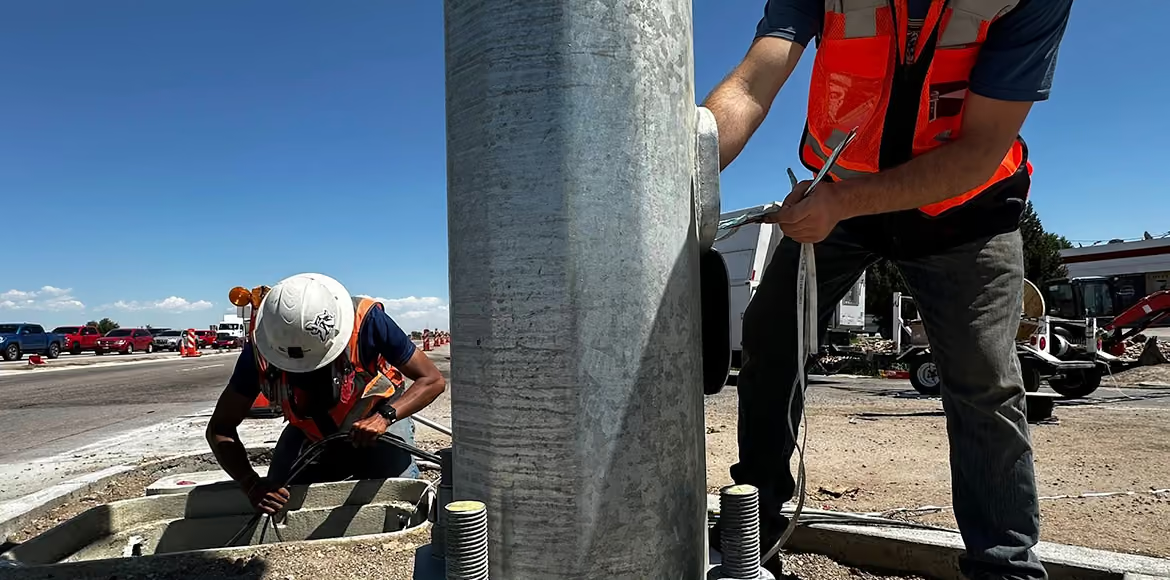
Every durable signal starts with correct underground work. Conduit depth, sweep angles, and backfill quality determine how well a system performs years down the road. When underground paths are clean and accessible, pulling wire is easier and future maintenance is safer and faster. Our crews focused this year on consistent conduit alignment, properly rated junction boxes, and clean transitions that protect cable from moisture and abrasion. Cities save significant long term costs when the foundation is done right.
Today’s controllers and cabinets are smarter than ever. They manage detection, signal timing, coordination plans, emergency preemption, and communications. This level of technology performs well only when wiring is clean, labeled, and connected correctly. Our standard process includes detailed labeling, shielded cable where required, and clear cable routing inside every cabinet. The result is easier inspection, simplified troubleshooting, and fewer unexpected failures.
This year highlighted how critical proper pole and mast arm installation is. Tightening hardware to manufacturer torque specs, aligning signal heads for daytime and nighttime visibility, and checking clearances help prevent safety issues and long term drift. Using corrosion resistant materials and verified mounting techniques ensures the intersection stays compliant and consistent for decades.
Detection has become more advanced each year. Cities now rely on video detection, radar, bicycle detection, and improved pedestrian systems. These tools require precise placement and field calibration to avoid false calls, missed vehicles, and frustrated drivers. Our teams spent considerable time fine tuning sensors so signals respond accurately in all weather and lighting conditions.
Lighthouse has maintained strict adherence to MUTCD guidelines, municipal standards, and ADA requirements. That includes proper grounding, rated LED modules, correct clearance heights, and full intersection testing before activation. Compliance protects the public and reduces the risk of costly future upgrades.
As traffic volumes grow and cities continue investing in smart infrastructure, the demand for reliable, professionally installed traffic signal systems will only increase. Our goal at Lighthouse is to stay ahead of that demand by focusing on skilled installation, strong communication with city inspectors, and long term system reliability.
The end of the year is the ideal time for municipalities to evaluate upcoming infrastructure needs. Whether upgrading controllers, improving pedestrian safety, or building new intersections, Lighthouse is ready to support every phase from trenching to turn on.
We’re a small team that loves to create great experiences and make meaningful connections between builders and customers. Join our remote ream!


.gif)